
Smart lighting benefits: save energy and enhance your home
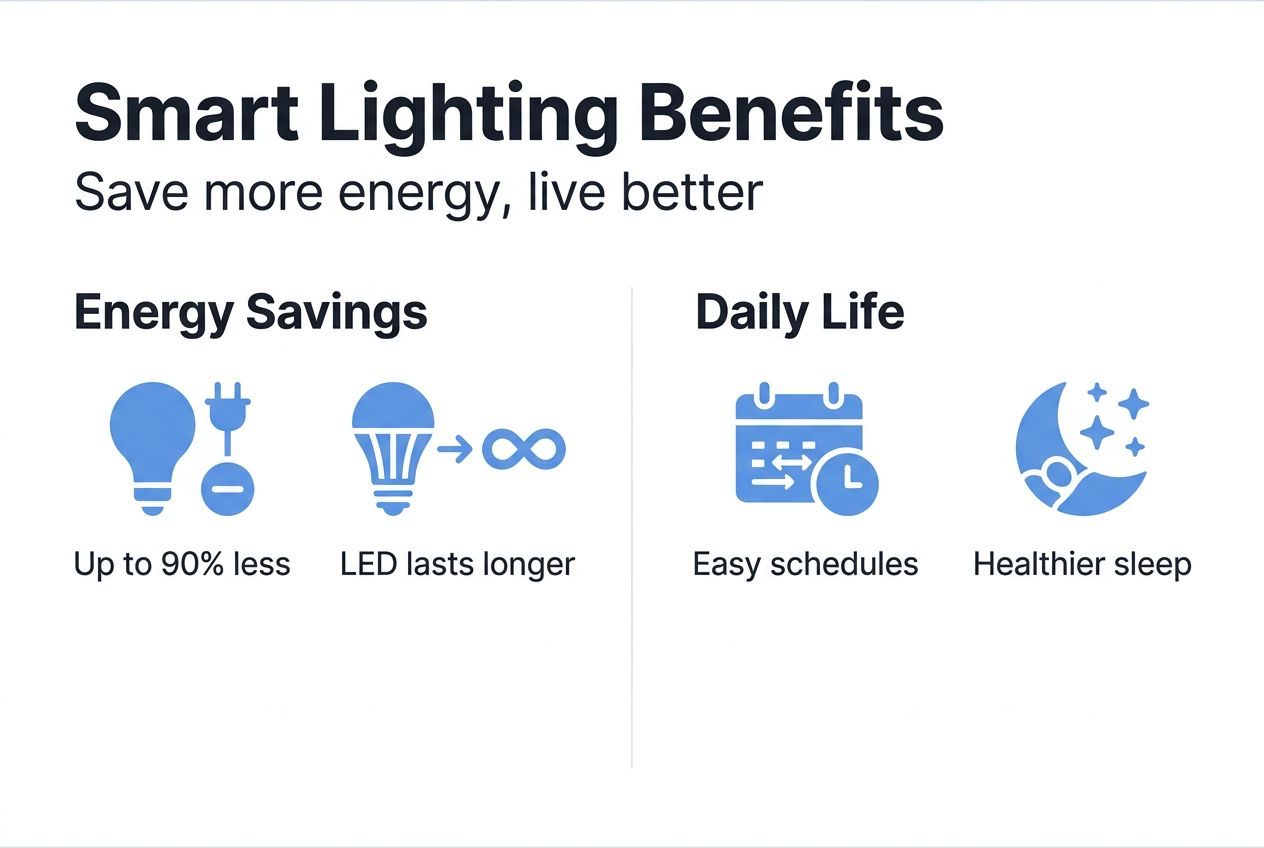
Switching to smart lighting can slash your energy bills by up to 90% compared to traditional incandescent bulbs while transforming how you experience your living space. These intelligent systems combine energy-efficient LED technology with automated controls, sensors, and customizable features that adapt to your lifestyle. As more homeowners prioritize sustainability and convenience, smart lighting has evolved from a luxury to an accessible solution that delivers measurable savings, health benefits, and environmental impact.
Key takeaways
| Point | Details |
|---|---|
| Energy savings | Smart LED bulbs reduce electricity consumption by up to 90% compared to incandescent lighting. |
| Extended lifespan | LED technology lasts 15 to 25 times longer than traditional bulbs, cutting replacement costs. |
| Health benefits | Dynamic color temperature adjustments support circadian rhythms and improve sleep quality. |
| Automation advantages | Motion sensors and scheduling deliver an additional 30% energy reduction beyond LED efficiency. |
| Environmental impact | Widespread adoption could eliminate carbon emissions equivalent to removing 388 million cars annually. |
Introduction to smart lighting and its growing relevance
Smart lighting systems integrate LED bulbs with wireless controls, sensors, and automation software to create responsive illumination tailored to your needs. The market has experienced explosive growth as homeowners recognize both immediate cost savings and long-term benefits.
Typical smart lighting components include:
- LED bulbs with adjustable brightness and color temperature
- Motion and occupancy sensors for automatic activation
- Smartphone apps and voice assistant integration
- Daylight harvesting sensors that adjust based on natural light
- Programmable schedules and scene presets
The lighting industry has undergone a dramatic transformation over the past decade. Incandescent bulbs dominated homes for over a century despite converting most electricity into heat rather than light. Compact fluorescent lamps (CFLs) offered modest improvements but contained mercury and provided harsh, inflexible illumination. LED technology changed everything by delivering superior efficiency, instant brightness, and compatibility with smart controls.
Today’s smart lighting systems represent the convergence of LED efficiency and digital connectivity. Homeowners can now control every aspect of their lighting remotely, automate responses to daily routines, and optimize energy use without sacrificing comfort or convenience.
How smart lighting saves energy and reduces costs
Energy-efficient LED smart bulbs consume up to 90% less electricity than traditional incandescent bulbs, dramatically lowering monthly utility bills. A standard 60-watt incandescent bulb draws significant power to produce light equivalent to what a 9-watt LED delivers effortlessly.
The efficiency gains extend beyond basic LED technology. Smart lighting systems use motion sensors, daylight harvesting, and automated schedules to prevent wasted illumination in empty rooms or during daylight hours. These intelligent features typically achieve 30% to 50% additional savings compared to standard LED bulbs left to manual control.
| Bulb Type | Wattage | Lifespan (Hours) | Annual Cost* |
|---|---|---|---|
| Incandescent | 60W | 1,000 | $72 |
| CFL | 14W | 8,000 | $17 |
| Standard LED | 9W | 25,000 | $11 |
| Smart LED | 9W | 25,000 | $8 |
*Based on 3 hours daily use at $0.13/kWh with automation savings
Maintenance costs drop substantially because LED bulbs last 15 to 25 times longer than incandescent alternatives. Replacing bulbs less frequently saves money on purchases and reduces the hassle of climbing ladders in hard-to-reach fixtures. Smart systems notify you when bulbs approach end of life, allowing proactive replacement during convenient times.
Automation features maximize these savings without requiring constant attention. Motion sensors ensure lights activate only when rooms are occupied, while daylight harvesting dims or switches off fixtures when natural light suffices. Scheduling turns lights on and off based on your routine, eliminating forgotten switches that waste electricity overnight.
Pro Tip: Combine motion sensors with scheduled overrides in frequently used spaces like kitchens and living rooms to capture maximum energy savings while maintaining reliable illumination during peak hours.
Exploring energy efficient home design save 1700 annually reveals how smart lighting integrates with broader efficiency strategies.
Health, wellness, and lifestyle enhancements from smart lighting
Smart lighting’s dynamic control over color temperature and intensity aligns artificial light with natural circadian rhythms that regulate sleep, mood, and alertness. Cool, bright light in the morning stimulates wakefulness, while warm, dimmed lighting in the evening signals your body to prepare for rest.

Human-centric lighting (HCL) takes this concept further by automatically adjusting throughout the day to support optimal biological functioning. Studies show proper lighting exposure improves focus during work hours, reduces eye strain, and enhances overall wellbeing. Customizable scenes let you create specific lighting moods for reading, relaxing, or entertaining guests.
Safety improvements accompany these wellness benefits. LEDs produce very little heat compared to incandescent bulbs that can reach temperatures exceeding 300°F, reducing fire risks in enclosed fixtures or near flammable materials. Lower operating temperatures also improve comfort in warm climates by minimizing unwanted heat generation.
Convenience features transform daily interactions with your home:
- Voice control through Alexa, Google Assistant, or Siri eliminates wall switch dependency
- Remote access via smartphone apps lets you control lights from anywhere
- Geofencing automatically adjusts lighting when you arrive or leave home
- Integration with smart home ecosystems enables coordinated scenes across devices
- Vacation modes simulate occupancy to deter potential intruders
Pro Tip: Program your bedroom lights to gradually brighten 30 minutes before your alarm and dim to warm tones an hour before bedtime to naturally regulate your sleep-wake cycle without relying solely on screens or blackout curtains.
Discover more about smart home lighting benefits and their impact on daily living.
Common misconceptions about LED and smart lighting technologies
Many homeowners hesitate to adopt smart lighting based on outdated information or misunderstandings about LED technology. Addressing these myths helps you make informed decisions.
Myth: LEDs are too expensive. While upfront costs once exceeded traditional bulbs, LEDs use up to 90% less energy and prices have dropped dramatically. Total cost of ownership over a bulb’s lifespan makes LEDs significantly cheaper than incandescent or CFL alternatives.
Myth: LED light quality is harsh and unflattering. Modern smart LEDs offer a wide range of color temperatures from cool daylight to warm candlelight, with high color rendering indexes that accurately represent colors and skin tones. You can customize the exact ambiance you prefer.
Myth: Smart lighting requires complex installation. Most smart bulbs screw into existing fixtures and connect to your home Wi-Fi network within minutes. No rewiring or professional installation is necessary for basic systems, though integrated fixtures may benefit from electrician assistance.
Myth: LEDs don’t work with dimmers. Dimmable LED bulbs pair seamlessly with compatible dimmer switches and smart controls. Smooth dimming from 100% to near-zero allows precise brightness adjustment impossible with incandescent technology.
Myth: LED bulbs need frequent replacement. Quality LEDs last 25,000 to 50,000 hours compared to 1,000 hours for incandescent bulbs. At typical usage rates, a single LED can illuminate your home for 15 to 25 years before requiring replacement.
Understanding these facts removes barriers to adoption and helps you appreciate the genuine advantages smart lighting delivers.
Comparing smart lighting technologies and features
Smart lighting encompasses various product types, each suited to different applications and budgets. Understanding your options helps you choose the right solution.
| Product Type | Best For | Control Options | Typical Cost Range |
|---|---|---|---|
| Smart bulbs | Existing fixtures | App, voice, schedule | $10-$60 per bulb |
| LED strips | Accent/under-cabinet | App, remote, music sync | $20-$100 per kit |
| Smart fixtures | New construction/remodel | Integrated app control | $50-$300 per fixture |
| Smart switches | Whole-room control | Wall switch plus app | $30-$80 per switch |
Control methods vary in sophistication and convenience:
- Smartphone apps provide comprehensive control over brightness, color, schedules, and scenes from anywhere
- Voice assistants enable hands-free operation through simple spoken commands
- Motion sensors automatically trigger lights based on occupancy, ideal for hallways and closets
- Physical remotes offer traditional button control without requiring app access
- Wall-mounted smart switches control entire rooms while maintaining familiar switch operation
Energy-saving features differ across product lines. Premium options include daylight harvesting that measures ambient light and adjusts output accordingly, while budget products may only offer basic scheduling. Dimming capabilities range from simple on/off to smooth 1% to 100% adjustment.
Cost-to-performance trade-offs matter for different spaces. High-traffic areas like kitchens and living rooms justify premium smart bulbs with full color and automation features. Closets and storage areas work fine with basic motion-activated LED bulbs. Outdoor fixtures benefit from weather-resistant integrated smart lights with security features.
Environmental impact and contribution to sustainability goals
Smart lighting adoption delivers substantial environmental benefits beyond individual energy savings. Widespread LED adoption could reduce carbon emissions by 1.8 billion metric tons annually, creating an impact comparable to removing hundreds of millions of vehicles from roads worldwide.
Reducing electricity demand decreases fossil fuel consumption at power plants, cutting greenhouse gas emissions and air pollution. Each kilowatt-hour saved prevents approximately 0.92 pounds of carbon dioxide from entering the atmosphere in regions dependent on coal or natural gas generation.
Key environmental advantages include:
- Lower manufacturing resource consumption due to extended bulb lifespan
- Reduced waste generation from fewer bulb replacements
- Elimination of toxic mercury found in CFL bulbs
- Decreased cooling loads in homes from lower heat emission
Smart lighting integration with solar and wind energy maximizes renewable resource utilization. Systems can prioritize lighting during peak solar production hours and dim during evening demand peaks when grid electricity costs more and carbon intensity increases. Battery-backed systems enable off-grid lighting capabilities that support energy independence.
Homeowners pursuing personal sustainability goals find smart lighting an accessible starting point. The technology delivers immediate, measurable results while requiring minimal behavior change. Many utility companies offer rebates for LED and smart lighting adoption, further improving return on investment while supporting regional emissions reduction targets.
Staying current with home lighting trends 2025 helps you align upgrades with both style and sustainability objectives.
Practical steps to implement smart lighting in your home
Successful smart lighting implementation follows a systematic approach tailored to your home’s unique characteristics and your family’s needs.
-
Assess your current setup. Inventory existing fixtures, bulb types, and usage patterns. Identify rooms with highest electricity consumption or longest daily use as priority upgrade targets.
-
Choose compatible products. Research smart bulbs and controls that work with your preferred ecosystem (Apple HomeKit, Google Home, Amazon Alexa, Samsung SmartThings). Verify compatibility before purchasing to avoid frustrating integration issues.
-
Start with high-impact areas. Install smart bulbs in living rooms, kitchens, and bedrooms where you spend the most time and can immediately appreciate features like dimming and color adjustment.
-
Add automation gradually. Begin with simple schedules that turn lights on at sunset and off at bedtime. Layer in motion sensors for bathrooms and hallways as you become comfortable with the technology.
-
Customize for health and comfort. Adjust color temperatures to support your daily rhythm: cooler tones (5000K-6500K) for morning and work spaces, warmer tones (2700K-3000K) for evening relaxation.
-
Maintain and update regularly. Install firmware updates as manufacturers release them to access new features and security patches. Clean fixtures periodically to maintain optimal light output.
Common pitfalls to avoid:
- Mixing incompatible ecosystems that can’t communicate
- Overlooking Wi-Fi network capacity for numerous connected devices
- Installing non-dimmable LEDs with dimmer switches
- Ignoring fixture heat ratings in enclosed spaces
Pro Tip: Before committing to a full-home installation, purchase one or two smart bulbs to test features, app interfaces, and compatibility with your home network and existing devices.
Exploring approaches to simplify minimalist lighting design can help you create clean, functional smart lighting layouts.
Enhance your home with smart lighting solutions
Transforming your living space with smart lighting delivers immediate benefits in energy savings, convenience, and wellbeing. The technology has matured to offer reliable performance at accessible price points, making now an ideal time to upgrade your home illumination.

Whether you’re seeking to reduce utility bills, improve sleep quality through circadian-aligned lighting, or simply enjoy voice-controlled convenience, smart lighting systems integrate seamlessly with existing fixtures and home automation platforms. Start with a single room to experience the difference, then expand throughout your home as you discover which features matter most to your family.
Explore lighting solutions and home enhancement products at Brilliante Crystal Cleaner to complement your smart lighting upgrades with properly maintained fixtures that maximize light quality and aesthetic appeal.
FAQ
What is the typical payback period for investing in smart lighting?
Most homeowners recover their smart lighting investment within one to three years through reduced energy bills and eliminated bulb replacement costs. Homes with higher electricity rates or extensive lighting use see faster payback periods. Utility rebates can shorten the timeline further.
Can smart lighting improve my family’s health and wellbeing?
Yes, dynamic color temperature control supports natural circadian rhythms that regulate sleep-wake cycles and mood. Human-centric lighting features enhance focus during work hours and promote relaxation in the evening. Proper lighting reduces eye strain and headaches associated with harsh or inadequate illumination.
Are smart lighting systems compatible with all home automation hubs?
Most smart bulbs work with popular platforms like Amazon Alexa, Google Home, and Apple HomeKit, but compatibility varies by manufacturer and communication protocol. Some products use Wi-Fi for direct connection, while others require Zigbee or Z-Wave hubs. Always verify compatibility specifications before purchasing to ensure smooth integration with your existing smart home ecosystem.
What features should I prioritize when choosing smart lighting?
Focus on energy efficiency ratings, ecosystem compatibility with your existing devices, and control options that match your preferences. Consider bulb lifespan, color temperature range, and automation capabilities like scheduling and motion sensing. Balance initial cost against long-term savings potential, prioritizing quality products that offer warranty protection and reliable performance over budget options that may fail prematurely.