
Glass vs crystal wine glasses: which is best for your home?
TL;DR:
- Crystal glasses offer superior clarity and a signature ring but are more fragile and expensive.
- Standard glass is durable, affordable, and suitable for everyday use, while crystal is ideal for special occasions.
- Lead-free crystal is safer for regular use, with minimal leaching risks compared to traditional leaded crystal.
Sommeliers swear by crystal wine glasses for unlocking wine’s aroma, yet side-by-side testing consistently shows that standard glass holds up better to real-world use. This gap between prestige and practicality is exactly why so many homeowners and wine lovers get stuck when shopping for stemware. The truth is, neither material wins outright. Your best choice depends on how you entertain, how you clean your glasses, and whether safety concerns factor into your household. This guide breaks down the key differences, sensory impact, health considerations, and care routines so you can make a confident, informed decision.
Key Takeaways
| Point | Details |
|---|---|
| Crystal enhances aroma | Crystal glasses are valued by sommeliers for their potential to enhance perceived wine aroma. |
| Glass is more durable | Standard or tempered glass wine glasses are tougher and easier to care for daily use. |
| Short-term use is safe | Drinking from lead crystal is safe for short periods, but avoid long-term storage of wine in these vessels. |
| Care impacts longevity | Proper cleaning and storage extend the life and sparkle of any wine glass. |
| Hybrid options exist | Modern hybrids combine crystal-like clarity with the durability and price of glass. |
Material matters: What sets glass and crystal apart?
Before you can choose wisely, you need to understand what you are actually comparing. The words “glass” and “crystal” get used interchangeably in kitchenware marketing, but they refer to genuinely different materials with different properties.
Standard glass (soda-lime glass) is made primarily from silica sand, soda ash, and limestone. It is non-porous, affordable, widely available, and holds up well to everyday use. Most casual wine glasses you find at grocery stores or big-box retailers are soda-lime glass.
Crystal, by contrast, contains added minerals, traditionally lead oxide, at concentrations of 25% or more. More recently, lead-free crystal uses minerals like barium oxide or zinc oxide to achieve similar optical effects without the lead content. The mineral content is what gives crystal its signature qualities.
Here is what actually separates them in practice:
- Clarity: Crystal refracts light differently, giving wine a brilliant, almost gemlike sparkle that standard glass cannot match.
- Thinness: Crystal can be shaped into thinner walls and rims, which many wine drinkers find more elegant and comfortable.
- Sound: Tap a crystal glass and you hear a clear, sustained ring. Tap glass and you get a dull thud.
- Weight: Crystal glasses often feel lighter for their size despite the mineral content, because the walls are thinner.
- Price: Standard glass is significantly cheaper. Quality crystal can run anywhere from $30 to over $100 per stem.
As glassware materials research confirms, crystal offers higher clarity and that characteristic ring, while glass is more durable and affordable for everyday use.
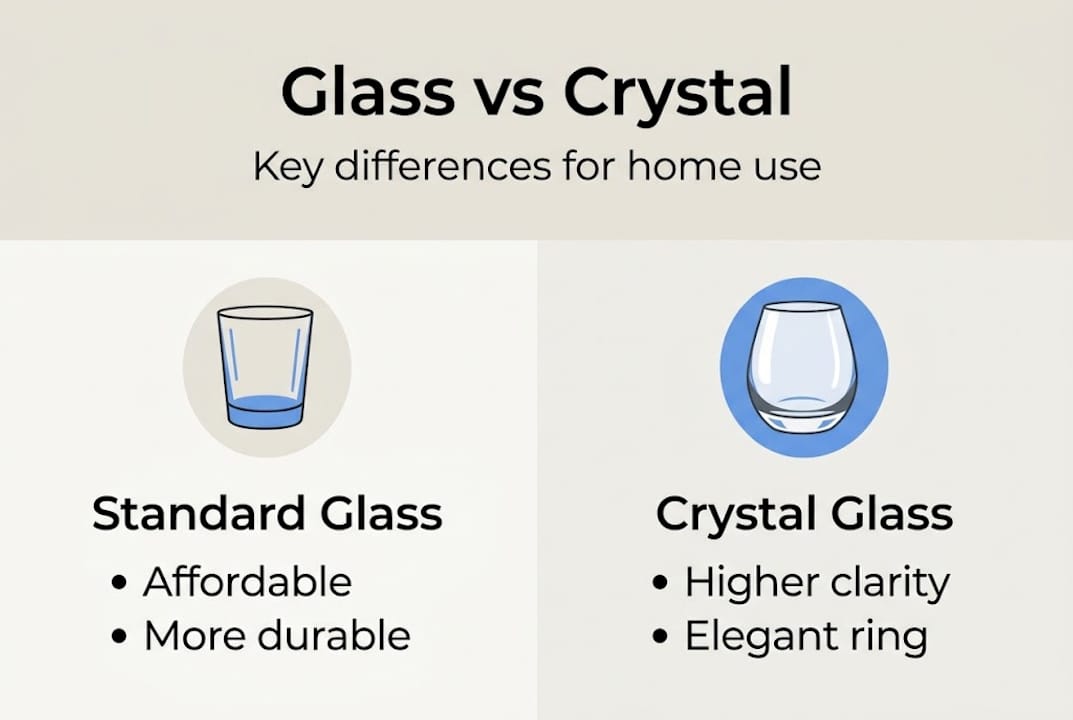
| Attribute | Standard glass | Crystal |
|---|---|---|
| Clarity | Good | Excellent |
| Weight | Heavier | Lighter (thinner walls) |
| Durability | High | Moderate to low |
| Tone when tapped | Dull | Clear ring |
| Price range | $ | $$$ |
| Dishwasher safe | Usually | Rarely |
If you are curious about the broader difference between crystal and glass in home decor and design contexts, the same principles of clarity and mineral content apply across products.
Sensory experience: Does crystal actually enhance wine?
With a clearer sense of what makes these materials distinctive, let’s see how this affects the actual wine drinking experience.
Sommeliers and serious wine professionals lean heavily toward crystal. The reasoning is practical: crystal’s thinner rim delivers wine to the tongue differently, and the texture of the glass surface, slightly more porous than standard glass, may help wine aerate faster. These are real, physical differences. The question is whether they translate into a meaningful upgrade for the average home drinker.
Sommeliers often favor crystal glasses for aroma, but home tests show tempered glass performing better for longevity and cost.
Any aroma difference is typically most noticeable under controlled tasting conditions with trained noses. Most people enjoying a Friday night pour with dinner are not operating at that level of sensory focus. The aroma difference becomes meaningful when you are actively evaluating a wine, not just enjoying it.
Here is a practical guide to when material actually matters:
- Serious wine tastings or dinner parties: Crystal is worth the investment for the visual impression alone.
- Casual weeknight sipping: Standard glass does the job without the anxiety of breaking a $60 stem.
- Outdoor events or backyard gatherings: Glass wins easily. Breakage risk is high, and crystal is fragile.
- Family dinners with kids around: Glass is safer in every way, including the lead question covered below.
- Gifting: Crystal makes a stunning, memorable gift for wine lovers.
Pro Tip: Consider “hybrid” stemware made from materials like Tritan crystal, which combines the visual appeal of traditional crystal with the durability closer to standard glass. Several premium brands now offer this option at a mid-range price, giving you clarity without the fragility.
For most households, the sensory gap between crystal and glass is real but subtle. You would need to be actively tasting and comparing to notice it consistently.
Safety and health: What you need to know about lead and modern crystal
Enjoying wine is about more than just taste. Safety plays an essential role, especially when serving guests or family.
Traditional lead crystal is beautiful, but it raises a genuine health question. Lead is used because it increases refractive index and makes the glass easier to cut and shape. The problem is that lead can migrate into acidic beverages like wine. Studies show lead can leach from crystal into wine, with short-term use generally considered safe for adults, while long-term storage poses a real risk.
Here are the key numbers to understand:
| Scenario | Estimated lead leaching |
|---|---|
| Short-term serving (under 30 min) | Low, generally safe for adults |
| Wine stored 2 hours in crystal | Measurable increase over baseline |
| Wine stored long-term (days/weeks) | Significantly higher, avoid |
| Spirits stored in crystal decanter | Very high risk, avoid entirely |
| Lead-free crystal, any duration | No lead risk |
The data is clear: occasional use for serving is fine for healthy adults, but storing wine or spirits in crystal is a different situation entirely.
Special caution applies for:
- Children: Their developing systems absorb lead more readily. Avoid leaded crystal entirely when serving them.
- Pregnant guests: No safe level of lead exposure has been established during pregnancy.
How to use stemware safely:
- Choose lead-free crystal as your default if you frequently entertain or serve vulnerable guests.
- Never store wine in crystal glasses or decanters overnight.
- Wash new crystal glasses thoroughly before first use.
- Keep spirits and fortified wines out of crystal decanters entirely.
- Check manufacturer labels for “lead-free” or “Pb-free” designations before purchasing.
Pro Tip: Never store wine or spirits in crystal decanters or glasses for long periods. Even a few hours with high-acid wines can increase lead migration significantly. If you love the look of crystal decanters on a sideboard, use them as display pieces and pour wine only when ready to serve.
Lead-free crystal options have improved dramatically and now rival traditional crystal in clarity and elegance, making them the smart, safe choice for most households.
Care and durability: Maintenance tips for sparkling wine glasses
Selecting the right wine glass doesn’t end with the purchase. Care and durability are key to making them last.
Standard glass is the clear winner for durability. It handles regular dishwashing, accidental bumps, and everyday storage without complaint. Tempered glass hybrids outperform crystal for longevity, though proper care can keep any glassware in excellent condition.
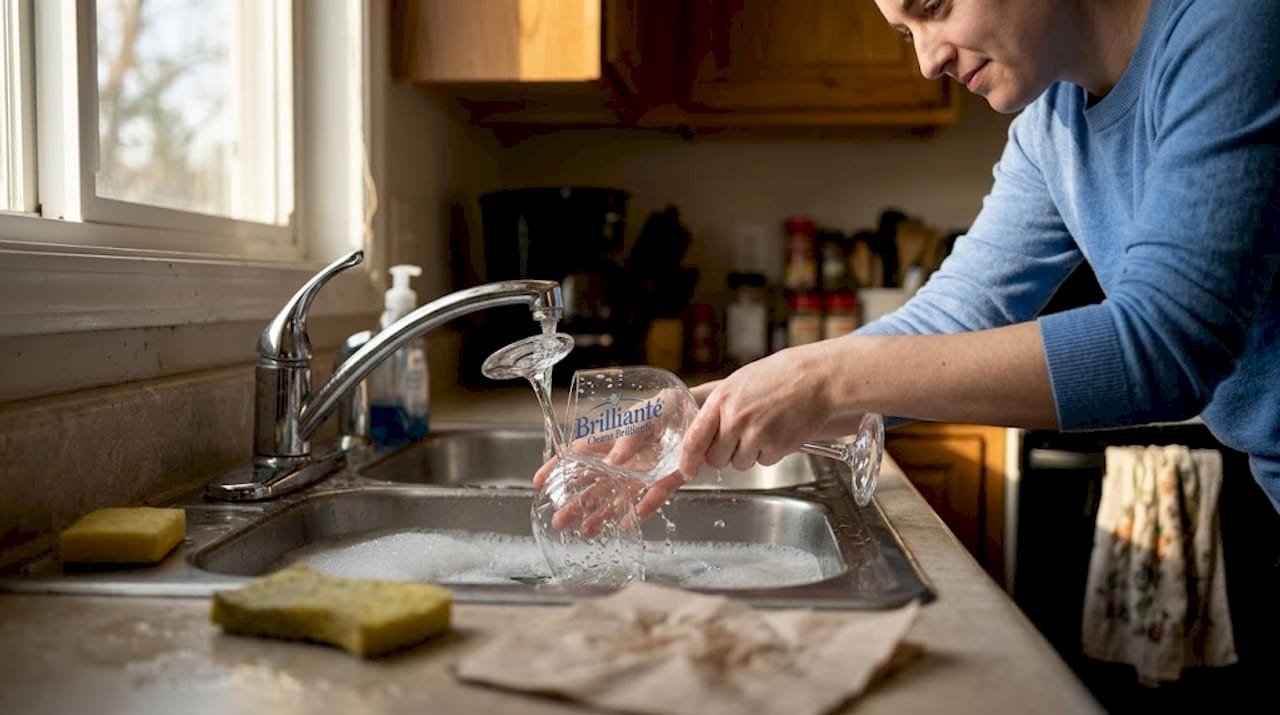
Crystal requires more attention. The same thinness that makes it elegant makes it vulnerable. Crystal is more likely to chip, crack, or shatter under thermal shock (sudden temperature changes) or physical pressure. It can also cloud over time if washed incorrectly.
Best-practice care routines for both materials:
For standard glass:
- Dishwasher use is usually fine on the glassware cycle with mild detergent.
- Avoid extreme temperature changes, like rinsing a hot glass with cold water.
- Store upright or in padded wine glass racks to prevent rim chips.
- Dry with a microfiber cloth to prevent water spots.
For crystal:
- Hand-wash only using warm (not hot) water and a small amount of gentle dish soap.
- Never use abrasive sponges or scouring pads.
- Rinse thoroughly to remove all soap residue, which can dull clarity.
- Dry immediately with a lint-free cloth to prevent water marks.
- Store in individual soft sleeves or a padded cabinet.
For broader tips on keeping glassware sparkling between uses, the same gentle, consistent approach that works for crystal home decor applies to your stemware. If you want to align your cleaning routine with sustainable habits, exploring eco-friendly glass care methods is a worthwhile step. For a complete routine, a crystal and glass cleaning checklist can help you stay consistent.
Our take: What most wine guides leave out about glass vs crystal
Most wine guides focus heavily on flavor profiles, grape varietals, and sensory enhancement. They treat the glass vs crystal question as though every wine drinker is a trained sommelier preparing for a competition. That perspective misses the reality of how most people actually drink wine at home.
Here is what we have learned from thinking seriously about crystal care and how people use their finest glassware: breakage and ease of maintenance matter more than marginal aroma differences for the vast majority of households. A gorgeous crystal wine glass that you are afraid to use is not serving anyone well.
Hybrids and modern lead-free crystal are genuinely closing the sensory and safety gap. You no longer have to choose between elegance and practicality. The best stemware for your home is the kind you will actually reach for and enjoy without stress.
Choose what fits your real occasions, not just your aspirations. For most people, that means a set of quality glass or hybrid stems for weeknights and perhaps a few crystal pieces for special evenings. Consistent care, as outlined in our shine maintenance tips, makes any quality glassware look its best. The experience of wine is about the moment you are in, not the material beneath your fingertips.
Upgrade your wine glass care for brilliance and safety
Whether you have chosen classic crystal, everyday glass, or a hybrid set, keeping your wine glasses genuinely clean and spotless is the final piece of the puzzle. Dull, spotted glasses undercut even the most beautiful stemware.
At Brilliante, we know how much the right care routine matters for crystal and glass alike. Our crystal glass care solutions are proudly made in the USA, formulated to be non-abrasive, environmentally friendly, and safe for your glassware and your household. Whether you are maintaining a crystal chandelier or keeping your finest wine glasses gleaming, Brilliante makes it effortless — a trusted choice for homeowners who want spotless results without the effort.
Frequently asked questions
Is it safe to drink wine from lead crystal glasses?
Yes, short-term serving in leaded crystal is generally safe for healthy adults, but lead can leach with prolonged contact, so never store wine in them and keep them away from children and pregnant guests.
Can you put crystal wine glasses in the dishwasher?
No. Crystal is fragile and can cloud, chip, or crack in the dishwasher; hand-washing is always the safer choice, while standard glass wine glasses are often dishwasher-safe.
Do crystal glasses really make wine taste better?
Sommeliers often favor crystal for its perceived aroma benefits, but most home drinkers notice little difference unless they are actively tasting and comparing with a trained palate.
What are hybrid wine glasses?
Hybrids like Tritan combine crystal-like optical clarity with greater durability and a lower price point, making them an excellent everyday choice for home entertaining.
How do I keep my wine glasses crystal clear?
Use a gentle detergent, rinse thoroughly with warm water, and dry immediately with a lint-free or microfiber cloth to prevent water spots and maintain long-term clarity.