
How to clean area rugs: 7 steps for lasting beauty
Area rugs add warmth and style to any room, but they also trap dirt, spills, and allergens that dull their appearance and shorten their lifespan. Without proper cleaning techniques, even the most beautiful rug can become a source of odors and stains that detract from your home’s aesthetic. This guide walks you through practical, step by step methods to clean your area rugs effectively at home, from gathering the right supplies to maintaining that fresh, vibrant look for years to come. Whether you’re dealing with everyday dust or stubborn pet stains, these proven strategies will help you protect your investment and keep your living spaces looking their best.
Key Takeaways
| Point | Details |
|---|---|
| Vacuum both sides | Vacuum thoroughly on both sides to remove loose dirt before any wet cleaning. |
| Test cleaners first | Test cleaning products on a hidden corner and wait 24 hours to check for color bleeding or fiber damage. |
| Proper drying essential | Dry the rug completely using fans or air drying to prevent mold and preserve freshness. |
| Eco friendly cleaners | Choose eco friendly cleaners to protect rug fibers and reduce chemical impact. |
Gathering your supplies and preparing your area rug for cleaning
Successful rug cleaning starts long before you apply any water or cleaner. Understanding your rug’s material and having the right tools on hand makes the difference between a refreshed rug and a damaged one. Cleaning effectiveness depends heavily on preparation including selecting the right tools and understanding rug materials.
First, identify what your rug is made from. Wool rugs require gentler treatment than synthetic fibers, while cotton rugs can typically handle more moisture. Check the care label if available, or perform a simple water drop test on an inconspicuous corner. If water beads up, your rug has a protective coating that affects cleaning methods. If it soaks in quickly, you’re working with absorbent natural fibers that need careful moisture management.
Gather these essential supplies before you begin:
- Vacuum cleaner with adjustable suction and upholstery attachment
- Mild liquid detergent or rug-specific cleaner
- Soft-bristled brush or sponge
- Clean white cloths or microfiber towels
- Bucket for mixing cleaning solution
- Fans, drying racks, or outdoor space for air drying
- Baking soda for odor absorption
- Rubber gloves to protect your hands
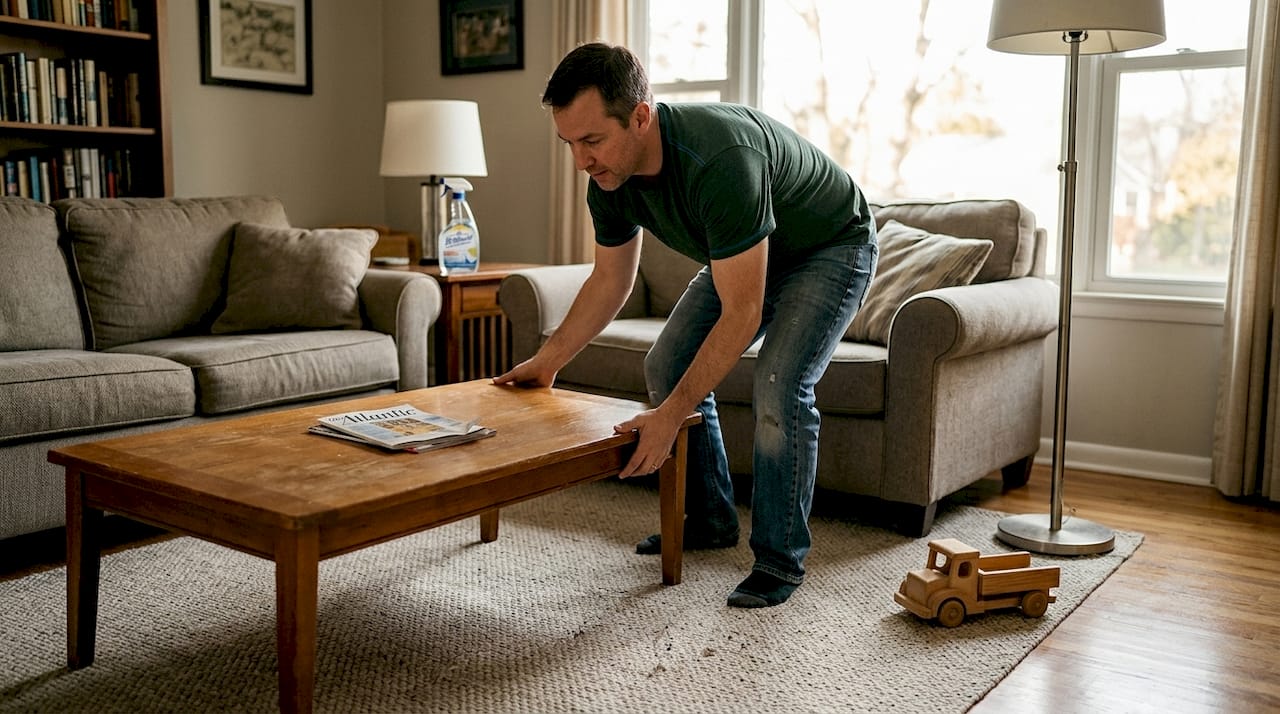
Clear the area completely by removing furniture and any objects resting on or near the rug. This prevents accidental water damage to furniture legs and gives you full access to every inch of the rug. Roll up the rug if possible and take it outside or to a garage where you can work without worrying about floor damage underneath.
Pro Tip: Always test your chosen cleaning product on a hidden section of the rug, like a corner that sits under furniture. Wait 24 hours to check for color bleeding or fiber damage before proceeding with the full cleaning.
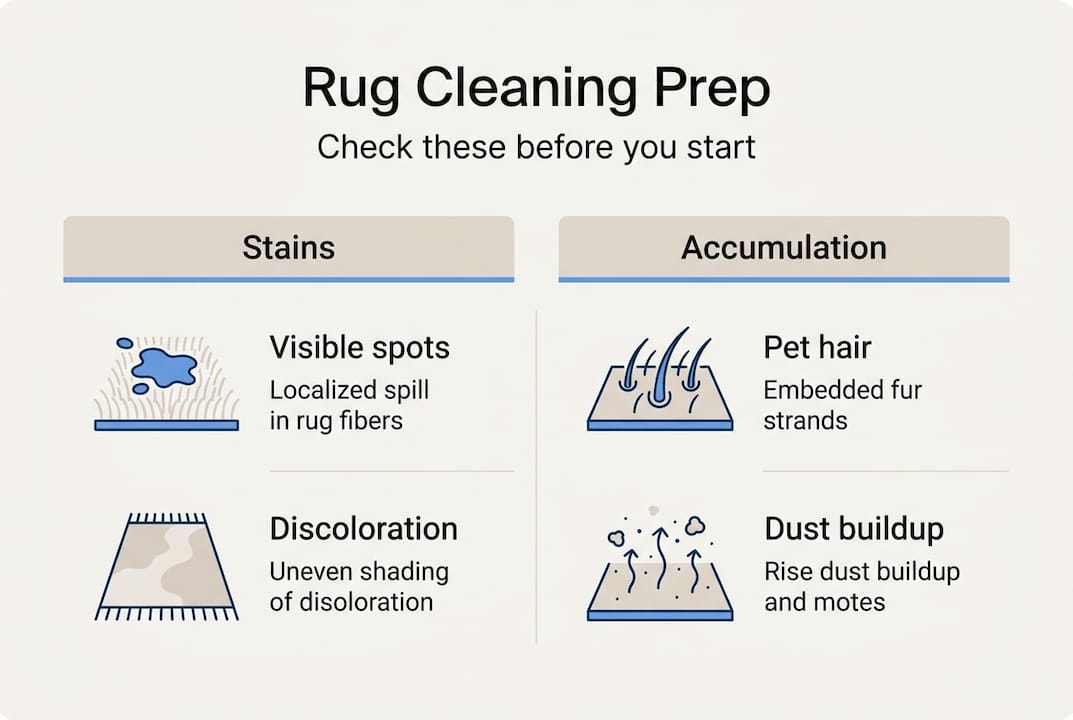
Assess your rug’s current condition carefully. Look for obvious stains, areas of discoloration, pet hair accumulation, and dust embedded in the pile. Run your hand across the surface. Does it feel gritty? That’s soil working its way into the base of the fibers, which requires thorough vacuuming before any wet cleaning. Understanding these specific problem areas helps you focus your efforts where they matter most.
| Rug Material | Cleaning Approach | Water Tolerance | Drying Time |
|---|---|---|---|
| Wool | Gentle, minimal moisture | Low to moderate | 24-48 hours |
| Synthetic | More aggressive cleaning OK | High | 12-24 hours |
| Cotton | Machine washable (if small) | High | 12-24 hours |
| Silk | Professional cleaning recommended | Very low | 48+ hours |
Start with gentle vacuuming on both sides of the rug to remove loose dirt and debris. Use lower suction settings for delicate rugs to avoid pulling fibers. This initial vacuuming step removes the surface layer of dirt that would otherwise turn into mud when you introduce moisture, making your cleaning job much harder and less effective. For more eco-friendly cleaning tips that protect both your rugs and your home environment, consider natural cleaning solutions that deliver results without harsh chemicals.
Step by step guide to cleaning your area rug at home
With your supplies ready and your rug assessed, it’s time to restore that fresh, clean appearance through systematic cleaning. Follow these steps carefully to avoid common pitfalls that can damage fibers or leave residue behind.
-
Vacuum thoroughly on both sides. Start with the back of the rug to loosen dirt trapped at the base, then flip and vacuum the front pile. Use overlapping strokes and move slowly to give the vacuum time to extract embedded particles. Pay extra attention to high-traffic areas where dirt accumulates fastest.
-
Treat stains immediately with appropriate cleaners. Mix a solution of one tablespoon mild detergent per two cups of cool water. For organic stains like food or pet accidents, enzymatic cleaners work best. Apply the solution to the stain, working from the outside edges toward the center to prevent spreading. Prompt spill treatment and thorough rinsing reduce stains and residue that damage rug fibers.
-
Gently scrub with a soft brush or sponge. Use circular motions and light pressure. Aggressive scrubbing crushes fibers and can create permanent texture changes that make cleaned areas look different from the rest of the rug. Let the cleaning solution do the work rather than relying on elbow grease.
-
Rinse thoroughly to remove all soap residue. This step is critical but often rushed. Soap left in fibers acts like a dirt magnet, causing your rug to look dingy again within days. Use clean water and a fresh sponge or cloth, changing the water frequently until no suds appear when you blot the rug.
-
Extract excess water carefully. Press clean, dry towels firmly into the rug to absorb moisture. Walk on the towels to increase pressure and draw out more water. If you have access to a wet/dry vacuum, use it on the lowest setting to remove additional moisture without damaging fibers.
-
Air dry flat in a well-ventilated space. Never hang a wet rug, as the weight of the water can stretch and distort its shape. Lay it flat on a clean, dry surface, preferably outdoors on a sunny but not scorching day, or indoors with fans circulating air across both sides. Flip the rug every few hours to ensure even drying.
-
Ensure complete dryness before replacing the rug. Touch the rug’s center and base to verify no dampness remains. Any moisture left behind creates the perfect environment for mold and mildew growth, which produces musty odors and potential health concerns.
Pro Tip: If your rug has fringe, clean it separately by dipping it in your cleaning solution and gently combing through with your fingers or a wide-toothed comb. Never scrub fringe aggressively, as it tangles and breaks easily.
“The key to successful rug cleaning is patience. Rushing the drying process or using too much water causes more problems than it solves. Give each step the time it needs, and your rug will reward you with years of beauty.”
For homeowners seeking eco-friendly cleaner selection that protects both rugs and family health, choosing products without harsh chemicals or synthetic fragrances makes a significant difference in indoor air quality while still delivering effective cleaning power.
Common mistakes to avoid and troubleshooting tips for area rug cleaning
Even with the best intentions, homeowners often make errors that compromise cleaning results or damage their rugs. Understanding these pitfalls helps you achieve professional-quality results at home.
Don’t over-wet your rug. Excessive moisture penetrates deep into the backing and padding, where it takes days to dry and often leads to mildew growth. The rug should feel damp, not soaking wet, after cleaning. If you can wring water from the rug, you’ve used too much. Avoiding waterlogging and harsh chemicals prevents damage and color loss in area rugs.
Avoid these common cleaning mistakes:
- Using bleach or harsh chemicals that strip color and weaken fibers
- Scrubbing vigorously, which distorts texture and creates permanent marks
- Skipping the rinse step, leaving soap residue that attracts new dirt
- Placing the rug back before it’s completely dry
- Using hot water on wool or silk, which causes shrinkage
- Ignoring manufacturer care instructions for specialty rugs
If odors persist after cleaning, the problem likely stems from bacteria or mildew in the rug’s base. Sprinkle a generous layer of baking soda across the entire surface and let it sit for at least four hours, or overnight for severe odors. Vacuum thoroughly to remove the baking soda along with the odors it has absorbed. For stubborn smells, repeat this process or consider a specialized odor eliminator designed for textiles.
Pet stains require immediate action to prevent permanent damage and lingering smells. Blot up as much liquid as possible with paper towels, then apply an enzymatic cleaner specifically formulated to break down organic matter. These cleaners work at the molecular level to eliminate odors rather than just masking them. Never use steam cleaners on pet stains, as heat sets the stain permanently into fibers.
“In humid climates or during wet seasons, drying becomes the biggest challenge. Set up multiple fans to create cross-ventilation, or use a dehumidifier in the drying space. The investment in proper drying equipment pays off in rug longevity and freshness.”
When colors bleed during cleaning, stop immediately and blot up all moisture. This typically happens with rugs that weren’t colorfast to begin with, often seen in handmade or vintage pieces. For these rugs, professional cleaning is the safer choice. You can test colorfastness before cleaning by dampening a white cloth and pressing it firmly against different colored sections of the rug. If any color transfers to the cloth, wet cleaning risks permanent damage.
For additional eco-friendly cleaning tips that help you avoid harsh chemicals while maintaining a clean, healthy home, explore natural alternatives that deliver professional results without environmental impact.
Maintaining your area rugs for long-lasting cleanliness and beauty
Regular maintenance prevents the need for intensive deep cleaning and keeps your rugs looking fresh between major cleaning sessions. Building simple habits into your routine makes rug care effortless and extends the life of your investment significantly.
Establish a consistent vacuuming schedule based on traffic patterns. High-traffic rugs in entryways or living rooms need weekly vacuuming, while rugs in guest rooms or formal spaces can go two weeks between sessions. Regular upkeep including vacuuming and prompt spot cleaning extends rug life and enhances home hygiene. Rotate rugs every three to six months to distribute wear evenly and prevent permanent traffic patterns from forming.
Follow these ongoing maintenance practices:
-
Vacuum in multiple directions to lift pile and remove dirt from all angles, not just the direction you typically walk across the rug.
-
Address spills within minutes by blotting (never rubbing) with a clean, dry cloth, then treating with appropriate spot cleaner if needed.
-
Use quality rug pads underneath every area rug to prevent slipping, provide cushioning, and create an air gap that reduces dirt accumulation and moisture retention.
-
Limit direct sunlight exposure by closing curtains during peak sun hours or rotating rugs so fading occurs evenly rather than in distinct patterns.
-
Schedule professional cleaning annually for heavily used rugs or every two to three years for rugs in low-traffic areas, depending on household factors like pets and children.
-
Shake out small rugs outdoors monthly to remove dust and debris that vacuuming alone misses, especially from the rug’s backing.
Pro Tip: Place doormats at every entrance to your home. This simple addition captures up to 80% of dirt before it reaches your area rugs, dramatically reducing the cleaning frequency needed and extending rug life.
| Maintenance Method | Frequency | DIY or Professional | Cost |
|---|---|---|---|
| Vacuuming | Weekly to biweekly | DIY | Equipment cost only |
| Spot cleaning | As needed | DIY | $5-15 per cleaner |
| Rotation | Every 3-6 months | DIY | Free |
| Deep cleaning | Annually | DIY or Professional | $50-200+ depending on size |
| Professional cleaning | Every 1-3 years | Professional | $100-400+ depending on rug |
When comparing professional cleaning versus DIY deep cleaning, consider your rug’s value, age, and material. Antique rugs, silk rugs, and pieces with significant monetary or sentimental value warrant professional care to avoid irreversible damage. Synthetic rugs and modern cotton pieces are generally safe for home cleaning if you follow proper techniques. Professional cleaners have specialized equipment that extracts more water and dirt than home methods, resulting in faster drying times and deeper cleaning.
Protect your rugs from furniture indentations by using furniture coasters or cups under heavy pieces. Move furniture slightly every few months to prevent permanent crushing of pile fibers. If indentations do occur, try steaming the area with a handheld steamer while gently lifting fibers with a soft brush, then let the area dry completely.
For comprehensive eco-friendly cleaning tips that protect your entire home while maintaining beautiful, clean area rugs, natural cleaning methods offer powerful results without exposing your family to unnecessary chemicals.
Preserve your area rugs with expert cleaning solutions
While DIY cleaning handles routine maintenance beautifully, professional-grade products can elevate your results and simplify the process. After mastering the fundamentals of rug care, many homeowners discover that specialized cleaning solutions deliver superior results with less effort.
Brilliante Crystal Cleaner brings the same commitment to excellence and environmental responsibility to all cleaning challenges that homeowners face. Their formulations prioritize safety without compromising effectiveness, making them ideal for households with children, pets, or anyone concerned about indoor air quality.
Explore the full range of Brilliante Crystal Cleaner products designed to complement your at-home cleaning efforts. Their eco-friendly approach means you can maintain spotless rugs and a healthier home environment simultaneously. The drip-dry technology that made their crystal cleaner famous translates beautifully to other cleaning applications, offering convenience and effectiveness in every product.
For homeowners ready to take their rug care to the next level, professional rug cleaning solutions from Brilliante provide the perfect bridge between DIY maintenance and expensive professional services. Made in the USA with environmentally conscious ingredients, these products deliver the deep cleaning power you need while protecting the fibers and colors that make your rugs special.
Frequently asked questions
How often should I deep clean my area rugs?
Most area rugs benefit from deep cleaning once per year, though heavily trafficked rugs or homes with pets may need attention every six months. Regular vacuuming and prompt spot cleaning reduce the frequency of deep cleaning required. Listen to your rug by watching for dullness, persistent odors, or visible soil that vacuuming doesn’t remove.
Can I use household cleaners on my area rug?
Stick with mild detergents specifically designed for delicate fabrics or rug-specific cleaners. Avoid bleach, ammonia, or multi-surface cleaners that contain harsh chemicals. These products can permanently damage rug fibers, cause color bleeding, or leave residues that attract more dirt. When in doubt, test any cleaner on an inconspicuous area first.
What’s the best way to dry area rugs after cleaning?
Air-dry rugs flat in a well-ventilated space away from direct sunlight, which can fade colors. Position fans to circulate air across both sides of the rug, flipping it every few hours. Use a dehumidifier in humid environments to speed drying and prevent mildew. Complete drying typically takes 12 to 48 hours depending on rug thickness and material.
How do I remove pet stains and odors from area rugs?
Treat pet accidents immediately by blotting up liquid, then apply an enzymatic cleaner designed specifically for pet stains. These cleaners break down organic compounds that cause odors rather than just masking smells. Never use heat or steam on pet stains, as this sets the stain permanently. For ongoing freshness and additional pet stain and odor removal tips, regular grooming and preventive care make a significant difference.