
How to enhance natural light in your home in 2026
Most homeowners underestimate how much natural light affects their mood, health, and monthly energy bills. Poor lighting design can cost you hundreds annually in unnecessary electricity and leave rooms feeling cramped and uncomfortable. This guide reveals practical architectural strategies and simple decor adjustments to maximize daylight in your living spaces, drawing on 2026 design trends and research-backed techniques that transform how light flows through your home.
Key takeaways
| Point | Details |
|---|---|
| Orientation and layout | Proper home orientation and open floor plans form the foundation for effective natural lighting throughout your space. |
| Window and skylight strategy | Vertical glazing depth and strategically placed skylights boost daylight access while managing heat and glare. |
| Interior finishes matter | Light colors, reflective surfaces, and clean windows amplify natural light without structural changes. |
| Health and energy benefits | Optimized daylight reduces energy use by up to 10% while improving sleep, mood, and productivity. |
| Professional maintenance | Regular window cleaning and expert consultation ensure maximum light penetration and long-term efficiency. |
Understanding the foundation: orientation and architectural strategies
Orientation is the starting point of effective daylight design. A well-positioned home captures consistent, balanced light throughout the day. North-facing living spaces offer steady illumination with minimal glare and heat gain in most climates, making them ideal for rooms where you spend extended time. South-facing rooms receive intense direct sunlight, perfect for spaces needing warmth but requiring careful window treatment planning.
Before making changes, evaluate your site conditions thoroughly. Neighboring buildings, mature trees, and landscape features cast shadows that shift with seasons. Conduct simple shadow studies by observing your property at different times throughout the year. Note which areas receive consistent light and which stay dim. This baseline understanding prevents costly mistakes when planning renovations or window additions.
Removing non-load-bearing walls transforms how light moves through your home. Internal glazing, such as glass doors or transom windows between rooms, allows daylight to penetrate deeper into interior spaces without sacrificing privacy. Wider doorways and open floor plans create sightlines that guide natural light from perimeter windows into central areas. This approach works especially well in ranch-style homes or apartments with limited exterior wall access.
Consider structural openings carefully. Knocking down the wall between a dark kitchen and sunny dining room can double perceived brightness in both spaces. Installing a glass partition maintains separation while sharing light. Even small changes like replacing solid doors with French doors make measurable differences in how far daylight travels.
Pro Tip: Involve natural light planning at the earliest design phase of any remodel. Retrofitting daylight solutions after construction costs significantly more and limits your options compared to integrated planning from the start.
Architectural modifications require professional assessment, but the payoff in daily comfort and minimalist lighting efficiency makes the investment worthwhile for many homeowners.
Windows and skylights: maximizing daylight access and quality
Vertical height in window glazing enhances light depth more effectively than width in compact rooms. Tall, narrow windows push daylight farther into spaces than short, wide ones of equal area. This principle matters when replacing windows or planning additions. A nine-foot tall window illuminates a room more evenly than a six-foot window twice as wide, particularly in spaces deeper than 15 feet.
Skylights introduce daylight from above, reaching areas where wall windows cannot. Modern skylights provide excellent comfort without the drawbacks of older designs when properly installed. However, placement determines success. North-facing skylights deliver consistent, cool light throughout the day with minimal heat gain. South-facing skylights flood spaces with warmth but risk overheating during summer months without adequate shading or ventilation.
Installation quality makes or breaks skylight performance. Improper flashing and sealing cause leaks and structural damage over time. Thermal breaks prevent condensation that leads to mold growth. Choosing appropriate glazing for your climate matters too. Low-E coatings reduce heat transfer in hot climates, while clear glazing maximizes light in cooler regions.
| Skylight Type | Pros | Cons | Best For | Cost Range |
|---|---|---|---|---|
| Fixed | Lower cost, simple installation, excellent light | No ventilation, limited flexibility | Hallways, closets, stable climates | $500-$1,500 |
| Vented | Provides airflow, reduces moisture, versatile | Higher cost, requires motor or manual operation | Bathrooms, kitchens, humid areas | $800-$2,500 |
| Tubular | Minimal roof penetration, works in tight spaces | Limited light volume, fixed direction | Small rooms, closets, interior spaces | $400-$1,000 |
| Custom shapes | Dramatic effect, architectural statement | Expensive, complex installation, potential leaks | High-end remodels, vaulted ceilings | $2,000-$8,000+ |
Consider skylight distribution carefully. Multiple smaller units spread across a ceiling create more even illumination than one large skylight. This approach reduces harsh shadows and minimizes the risk of concentrated heat buildup. Three 2x2 foot skylights distributed strategically outperform a single 4x4 foot unit in most residential applications.
Pro Tip: Specify impact-resistant glazing for skylights in areas prone to hail or falling branches. The modest upfront cost prevents expensive repairs and maintains your home’s weather protection.
Window maintenance affects performance as much as design. Dirty glass blocks up to 40% of available light. Cleaning windows seasonally restores brightness immediately.
Interior finishes and decor: amplifying natural light effectively
Using lighter paint shades with reflective finishes is the best way to increase natural light in your home through decor choices alone. White and off-white walls reflect up to 80% of incoming light, while medium colors reflect only 50-60%. Semi-gloss or satin finishes bounce more light than flat paint, though they show wall imperfections more readily. Balance aesthetics with function by using satin on ceilings and semi-gloss on trim while keeping walls in eggshell finish.

Color temperature matters more than pure brightness. Cool whites can make north-facing rooms feel sterile and cold. Warm off-white shades with beige or yellow undertones balance the naturally cool quality of indirect northern light. Test paint samples on multiple walls and observe them throughout the day before committing to gallons.
Window treatments should enhance rather than block daylight. Sheer curtains diffuse harsh direct sun while maintaining brightness. Top-down, bottom-up shades let you control privacy without sacrificing upper window light. Mounting curtain rods well above window frames and extending them beyond the frame width allows full exposure when drapes are open, preventing fabric from shadowing the glass.
Keeping windows clean and unobstructed seems obvious but makes dramatic differences. Remove window screens during months when insects are not a concern. Screens can block 30% of light even when clean. Trim exterior vegetation that shadows windows, focusing on growth within five feet of the glass. Interior window sills should stay clear of clutter and decorative items that block lower panes.
Mirrors positioned strategically reflect natural light deeper into rooms, significantly enhancing brightness. Place large mirrors on walls opposite or adjacent to windows to double perceived light levels. Avoid positioning mirrors where they create glare or reflect unattractive views. Mirrored furniture, glass tabletops, and metallic decor accents multiply the effect on smaller scales.
Light-colored or reflective flooring contributes to overall brightness. Glossy hardwood, polished tile, or light-colored carpet reflects upward light that brightens ceilings and upper walls. Dark floors absorb light and make spaces feel smaller and dimmer regardless of window size.
Pro Tip: Clean windows inside and out at least twice yearly for maximum light transmission. Most homeowners underestimate how much grime accumulates and how significantly it reduces brightness.
These energy-efficient design choices compound with architectural improvements to create noticeably brighter, more pleasant living environments without major renovation expenses.
Health, energy, and wellbeing benefits of natural light at home
Effective daylighting reduces energy consumption by up to 10% while improving occupant satisfaction, productivity, sleep quality, and mood. This reduction translates to $100-$200 annually for typical households, with larger savings in sunnier climates or poorly lit homes. Reduced reliance on artificial lighting during daytime hours drives most savings, though improved heating efficiency from solar gain adds to the total in colder regions.
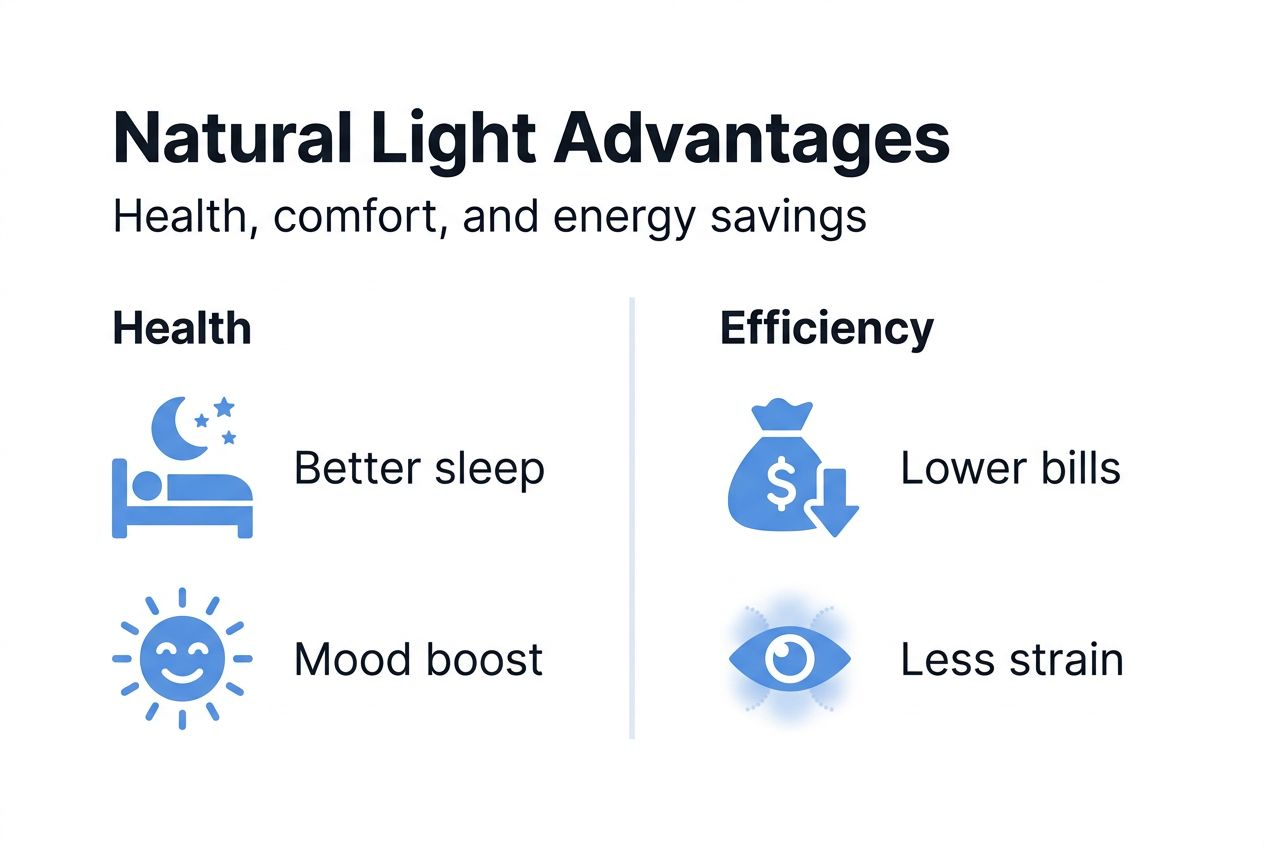
Exposure to daylight improves sleep quality, mood, and overall wellbeing through biological mechanisms. Natural light regulates circadian rhythms, the internal clock governing sleep-wake cycles. Morning sunlight exposure helps you fall asleep faster at night and wake more refreshed. Afternoon daylight maintains alertness and reduces the afternoon energy slump many people experience.
Mental health benefits extend beyond sleep. Seasonal affective disorder affects millions annually, with symptoms including depression, fatigue, and social withdrawal during darker months. Maximizing natural light exposure at home provides a proven intervention. Even people without diagnosed SAD report better moods and reduced stress in naturally lit spaces compared to artificially lit ones.
Biophilic design features including natural daylight boost focus and collaboration among occupants. While originally studied in workplace environments, these benefits translate directly to home offices, study spaces, and family areas. Children doing homework in naturally lit rooms show improved concentration. Adults working from home report higher productivity and job satisfaction with adequate daylight access.
| Metric | Limited Natural Light | Optimized Natural Light | Improvement |
|---|---|---|---|
| Daily artificial lighting hours | 8-10 hours | 4-6 hours | 40-50% reduction |
| Monthly energy cost | $85-$120 | $70-$100 | $15-$20 savings |
| Sleep quality rating (1-10) | 5.5-6.5 | 7.5-8.5 | 30% improvement |
| Self-reported mood score | 6.2/10 | 8.1/10 | 31% improvement |
| Productivity in home office | Baseline | 15-20% higher | Significant gain |
A 2025 workplace study found that employees in buildings with extensive daylighting and biophilic elements reported 15% higher wellbeing scores and 6% greater collaboration frequency compared to those in conventional buildings. These patterns hold for residential environments where occupants spend even more time.
Physical health benefits include better vitamin D synthesis and reduced eye strain. Natural light provides the full light spectrum your eyes evolved to process, unlike artificial sources that emit limited wavelengths. This reduces the headaches and fatigue associated with prolonged artificial light exposure, particularly from screens combined with poor ambient lighting.
Connecting your home’s smart lighting systems with natural daylight sensors optimizes both artificial and natural light management for maximum efficiency and comfort throughout the day.
Enhance your home’s natural light with expert solutions
Maximizing natural light requires more than good design. It demands consistent maintenance and professional insight to sustain brightness year-round. Regular professional window cleaning ensures maximum light penetration by removing accumulated grime, hard water deposits, and environmental pollutants that cloud glass. Most homeowners notice immediate improvements after professional cleaning, with rooms feeling 20-30% brighter.

Expert consultation on window treatments, interior finishes, and architectural modifications helps you avoid costly mistakes while achieving optimal results. Professional assessments identify opportunities you might overlook, such as internal glazing options or skylight placements that dramatically improve specific problem areas. These specialists understand how seasonal sun angles, local climate patterns, and your home’s unique layout interact to create or limit natural light potential.
Maintaining your lighting setup supports long-term energy savings and wellbeing benefits. Seasonal adjustments to window treatments, periodic exterior vegetation trimming, and proactive skylight inspections prevent gradual light loss over time. Small maintenance investments preserve the brightness you worked to achieve.
Pro Tip: Schedule professional window cleaning and lighting consultations twice yearly, ideally in spring and fall, to maintain optimal natural light throughout seasonal changes.
Discover how Brilliante Crystal Cleaner can help you maintain the sparkling clarity that maximizes every ray of natural sunlight entering your home, supporting both your wellbeing and your commitment to energy efficiency.
Frequently asked questions about natural light in the home
What are the best window orientations for natural light in homes?
North-facing windows provide consistent, even light throughout the day with minimal glare and heat gain, ideal for living spaces and home offices. South-facing windows deliver maximum direct sunlight and warmth but require careful window treatment planning to manage summer heat. East-facing windows offer bright morning light, while west-facing ones provide afternoon and evening illumination but can cause overheating.
How often should windows be cleaned to maximize daylight?
Clean windows inside and out at least twice yearly, typically in spring and fall, to maintain optimal light transmission. Homes near busy roads, in high-pollen areas, or coastal regions may need quarterly cleaning. Even clear-looking glass can accumulate invisible films that block up to 40% of available light, making regular professional cleaning a worthwhile investment for brightness and energy efficiency.
Can skylights cause overheating in summer?
Yes, improperly placed or specified skylights can significantly increase cooling costs and discomfort. South-facing skylights without adequate shading or ventilation often cause overheating in summer months. North-facing skylights minimize this risk while still providing excellent daylight. Vented skylights, low-E glazing, and proper sizing relative to room volume all help prevent excessive heat buildup while maintaining natural light benefits.
What paint colors work best to reflect natural light?
Light neutrals in warm off-white, soft beige, or pale gray tones reflect 70-80% of incoming light while preventing the sterile feel of pure white. Choose colors with Light Reflectance Values above 70 for maximum brightness. Pair lighter wall colors with white or near-white ceilings to bounce light throughout the room. Semi-gloss or satin finishes on trim and ceilings reflect more light than flat paints.
Is it worth remodeling walls to improve natural light flow?
Removing non-load-bearing walls or adding internal glazing often provides dramatic improvements in homes with limited exterior windows or deep floor plans. The investment typically ranges from $2,000 to $8,000 depending on scope, but daily comfort gains and energy savings can justify costs within 5-10 years. Consult a structural engineer before removing any walls, and consider less invasive options like wider doorways or transom windows first for smaller improvements at lower cost.